


Introduction
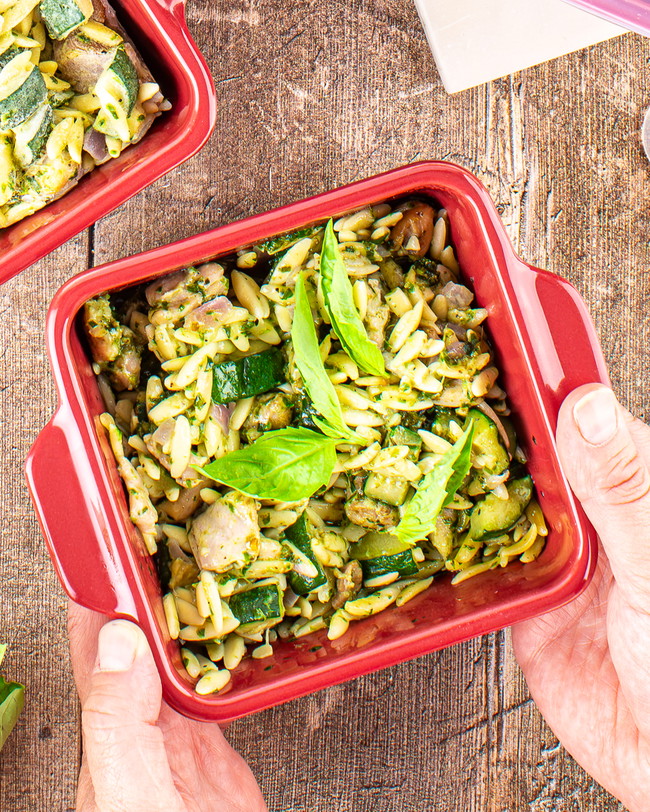
This one-pot dish is an ideal recipe for big-batch cooking, so you can serve it for dinner tonight and freeze the rest in individual portions for busy nights down the road. This vibrant dish features orzo, chicken, zucchini, and red onion and is finished with pesto and cream for something rich without being heavy. It’s one of our favorite recipes to capture peak summertime produce, like zucchini and basil. But when they are not in season, simply swap in whatever vegetable or herbs that you have on hand. Vegetables like broccoli, green beans, or peas make great alternatives to squash. If you don’t have chicken on hand, shrimp works beautifully here too.
Why You Will Love This Creamy Pesto Chicken Orzo Casserole (with Zucchini)

One Pot, Big Batch
Everything cooks in a single pot, start to finish. This means less time cleaning pots. The creamy orzo recipe yields enough for six, 1½ cup portions, as a main-dish or nine, 1-cup portions, as a side. There is plenty to serve now and plenty to stash away to build up your freezer stash.

Creamy Pesto Flavor
Cream is added to the sauce and once combined with the basil flavor, the result is a rich and herby dish that is ready in minutes.
Make Now, Freeze for Later
This is the built-in reason we love this recipe. It is quick and easy and makes a big portion that you can have a tasty dinner on a night when you don’t want to cook.
It's a Crowd-Pleaser
Creamy and cheesy pasta dishes tend to win over everyone at the table, from picky kids to skeptical adults. This one’s mild enough for kids but flavorful enough that nobody feels like they are eating a “kid” dinner.
It’s Versatile
This version uses chicken, zucchini, and orzo. But it’s not fixed. Swap in whatever protein you have or prefer. Trade in the zucchini for broccoli or green beans, or use a different small pasta or grain. The method is the same no matter what you have on hand.

Key Ingredients & Smart Swaps
Orzo Swaps & Gluten-Free
This pesto orzo recipe uses a full pound of orzo. Any short pasta works just as well like elbow macaroni, ditalini, rotini, pearl couscous, or fusilli. The most important point is that it is cooked al dente, 1 to 2 minutes less, according to the package. For gluten-free, swap in long-grain rice or a chickpea pasta like Banza; either version holds up fine through the freeze-and-reheat process.
Chicken Thighs vs. Breasts
Lead with thighs or a combo of both. We tested this recipe both ways, and thighs come out ahead for a dish that's meant to be frozen and reheated - they stay moister and more flavorful, where breasts can dry out. While both work our preference is to use chicken thighs. You can also use up some leftover cooked chicken from a previous meal.
Zucchini & Vegetable Swaps
Zucchini is the star here but yellow squash can certainly be used as a direct swap. Beyond that, green beans, broccoli, cauliflower, snap peas, kale, spinach, or tomatoes all work - just keep in mind cook times will vary by vegetable. Five cups of zucchini is the starting point; add more or less depending on how veggie-forward you want the dish.
Step-by-Step Instructions

1. Cook the Orzo
Bring 4 quarts water and 1 tablespoon salt to a boil in a large pot. Add the orzo and cook for 1 minute less than the package instructions for al dente, then drain in a colander and set aside. Pro Tip: Slightly undercooking the orzo here matters - it keeps cooking and absorbing the liquid, once you portion, freeze, and reheat it, so this is your one chance to control the texture.

2. Cook the Chicken
Return the same pot to the stove over medium-high heat with the olive oil. Add the chicken pieces, salt, and pepper, and cook, stirring occasionally, until lightly browned on all sides but not cooked through, about 4 minutes.

3. Add the Vegetables
Stir in the diced zucchini and red onion. Cook, stirring occasionally, until the zucchini softens and the chicken is just cooked through, about 4 minutes more.

4. Combine with Pesto & Cream
Return the cooked orzo to the pot along with the pesto and heavy cream. Stir until everything is evenly coated and heated through, about 1 minute more.
Success Tips for Creamy Pesto Chicken Orzo Casserole (with Zucchini)

Use Fresh Pesto
We reach for the fresh homemade pesto or pesto in the refrigerated section of the produce aisle over the jarred stuff by the pasta sauce. It often has less sodium, tastes brighter, and keeps a more vibrant green color in the finished dish. If jarred is what you've got, that's fine too, just taste before adding the full ½ teaspoon of salt, since jarred pesto can run saltier.
Cool Before Freezing
Let the pasta cool before portioning and freezing. For example, leaving the lid on the pot while the pasta is still hot traps in steam, which turns into condensation and leads to freezer burn.

Dice the Zucchini Evenly
Cut the zucchini into uniform pieces so it cooks (and reheats) at the same rate. Since zucchini has a high water content, unevenly sized pieces mean some will turn watery and mushy by the time the rest are done.
Don't Crowd the Chicken
Give the chicken space in the pot so it browns instead of steaming. If your pot is on the smaller side, cook it in two batches versus a crowded pan. If the pan is crowded, once the moisture is released from the chicken it will steam instead of browning the chicken. This will result in a pale color instead of a golden & flavorful piece of chicken.
How to Store & Freeze Creamy Pesto Chicken Orzo Casserole (with Zucchini)

How to Freeze Creamy Pesto Chicken Orzo Casserole in Souper Cubes Trays
Divide the finished casserole evenly between three, 2-cup Souper Cubes trays. Let it cool until it's no longer steaming, about 15 minutes. If you freeze it warm, it will seal in steam, which turns into condensation and then results in freezer burn.

Label the lids, and place the lids on top of the trays. Place the trays flat in the freezer and let them freeze solid, at least 8 hours or overnight. Pro Tip: Label the lid with the recipe name and date using our water-based paint marker or kitchen tape so it doesn't turn into a mystery cube.
How to Store Frozen Creamy Pesto Chicken Orzo Casserole

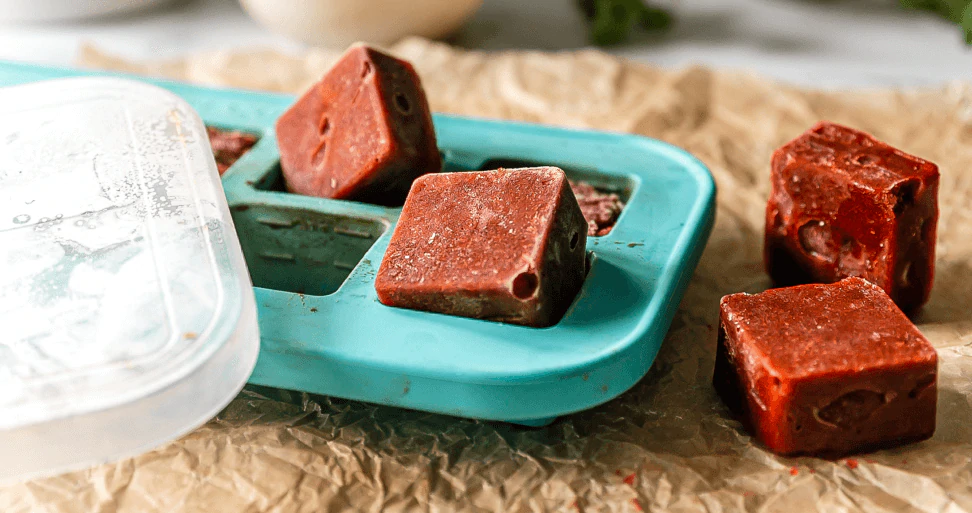
Once the cubes are frozen solid, remove from the freezer, then pop them out. For longer-term storage or to free up your trays for the next meal, transfer the cubes into Souper Cubes vacuum seal bags or a heavy-duty freezer bag, pressing out as much air as possible before sealing. Stored this way, it keeps well in the freezer for up to 3 months.
Refrigerator Storage Tips for Creamy Pesto Chicken Orzo Casserole in Souper Cubes Trays
If you're planning to eat it within a few days, skip the freezer altogether and store the casserole in an airtight container, or right in the tray with the lid on, in the refrigerator for up to 3 days. Since orzo continues to absorb liquid as it sits, the sauce will thicken up in the fridge; a splash of cream or broth when reheating brings it back to its original consistency.

How to Reheat Creamy Pesto Chicken Orzo Casserole (with Zucchini)
How to Reheat in the Oven
From frozen - Place the frozen block in the Souper Cubes ceramic baking dish or another oven-safe dish. Cover with foil or the silicone cover (keep the cover on but vented) and bake at 375°F for 40 minutes, then uncover and continue baking until bubbling at the edges and lightly browned on top,10 to 15 minutes more (internal temperature should reach 165°F). From thawed - Let it thaw in the refrigerator, then bake uncovered at 375°F, about 25 minutes.

How to Reheat in the Microwave
This is our top choice for reheating the chicken pesto orzo. From frozen - Place a frozen portion in a microwave-safe bowl or the Souper Cubes ceramic baking dish, and add a small splash of cream, milk, or broth to loosen the sauce as it reheats. Cover with the silicone lid or a damp paper towel to trap the steam, and microwave on 50% power for about 2 minutes. Finish cooking on high, until heated through, stirring in between, about 2 minutes. From thawed - cook on high, until heated through, stirring in between, about 3 minutes.
Can You Reheat It on the Stovetop, Slow Cooker (Crockpot) or Air fryer?
On the stovetop, add a portion to a saucepan over medium-low heat with a splash of water, broth, or cream to prevent scorching, and stir occasionally until hot throughout. This works well for a single portion and gives you the most control over the sauce's consistency.
A slow cooker (crockpot) isn't the best fit here - the low, extended heat tends to break the cream sauce and can turn the orzo mushy well before the dish is actually warmed through. Finally, an air fryer isn't recommended either, since the dry heat can dry out the pasta and sauce faster than it heats the center.
FAQ (Frequently Asked Questions)
How do I keep the casserole from getting dry?

The cream and pesto sauce is more prone to drying out than the orzo itself, so keeping it covered for the first stretch of reheating is the most important. You can choose to use foil or a silicone cover in the oven or a lid in the microwave. Essentially it traps moisture in instead of letting it evaporate off the top. If it looks dry once heated through, stir in a splash of cream, milk, or broth right before serving to bring the sauce back together.
Can you put uncooked orzo in a casserole?
Technically yes, but this recipe pre-cooks the orzo on purpose. Cooking it separately first (and slightly undercooking it) gives you full control over the texture, since it continues to soften once it's combined with the pesto and cream and again when reheated later. Dump-and-bake versions that add raw orzo straight into the pot can work, but they're harder to get right and more prone to gummy or unevenly cooked pasta. For a dish that's going into the freezer and getting reheated later, pre-cooking the orzo is the safer bet.
Can I bake chicken orzo with raw chicken?
Technically yes. This recipe browns the chicken in the pot before combining it with everything else, rather than baking it raw inside the casserole. Browning first builds flavor through caramelization and lets you confirm the chicken is fully cooked before it goes into the freezer, which matters for a make-ahead dish. Baking raw chicken directly in a casserole can work, but it's harder to guarantee even cooking, especially once the dish is frozen and reheated later. If you're short on time, cutting the chicken into smaller, uniform pieces helps it cook through faster in the pot.
What can I substitute for heavy cream in this orzo casserole?
Half-and-half is the closest 1:1 swap and will give you a slightly lighter but still rich sauce. Whole milk works too, though the sauce will be noticeably thinner and less creamy, so you may want to use a little less liquid overall. Full-fat coconut milk is a dairy-free option that adds richness, though it will bring a mild coconut flavor. Whatever you use, keep in mind that lower-fat substitutes are more likely to separate slightly when the dish is frozen and reheated, so heavy cream still gives the most reliable result for make-ahead purposes.

Can you freeze cooked orzo?
Yes, cooked orzo freezes especially well, particularly when it's coated in a creamy sauce like this one. Let it cool completely, then portion it into Souper Cubes silicone trays and freeze for up to 3 months. If you place it in Souper Cubes pre-cut vacuum seal bags, it will last even longer. There's no need to thaw before baking, so it's ready whenever you need a fast dinner.
Can you make this orzo casserole ahead of time?
Yes, it's genuinely built for it, not just tolerant of leftovers. Make the full pot, serve some for dinner tonight, and freeze the rest in individual portions for weeknight meals. It's the same one-pot effort now, just spread across several future dinners instead of one.
How do you keep orzo from getting mushy?
Cook the orzo just one minute under al dente before adding it to the rest of the dish. It continues to soften both when you first combine it with the pesto and cream, and again when you reheat the casserole later. Slightly undercooking it now is what keeps the texture right by the time it hits your plate.
Can I make this chicken orzo casserole gluten-free?
Yes! Orzo is a wheat pasta, but nothing about the method depends on it. Cook a gluten-free short pasta or long-grain rice according to its package directions, then stir it in at the same point the recipe calls for the orzo. The dish freezes and reheats exactly the same either way, so making it gluten-free doesn't change any of the make-ahead steps.
Is it better to use chicken thighs or breasts for this recipe?
Either works, but if you're planning to freeze and reheat it later, thighs are the more reliable choice. They hold up better through the freeze-thaw cycle and stay juicier on the second night, while breasts are more prone to drying out once reheated due to lower fat content. If breasts are what you have on hand, they'll still work fine - just expect a slightly less forgiving texture after freezing.


)




We would love to hear your ideas or better yet, post a photo of your cubes organized in our Freezer Meals & Recipes Facebook Group!